Recipe
Tipat
Rice steamed in a woven coconut-leaf pouch until it compresses into a cake. Tipat is the Balinese name; ketupat is the same idea under the Indonesian name.
By Chef Wayan Suryana, Warung Tumang BaliLast updated
Serves 6 to 8 cakes·Prep 20 minutes·Cook 2 hours
Cook Tipat with Chef Wayan in Petulu, about 10 minutes from central Ubud, depending on traffic. Check datesHow the class runs
Tipat in short
Tipat is rice steamed inside a woven coconut-leaf pouch until it compresses into a cake. Fill each pouch a little over half full and steam for about 2 hours. Ketupat is the Indonesian name for the same kind of pouch rice.
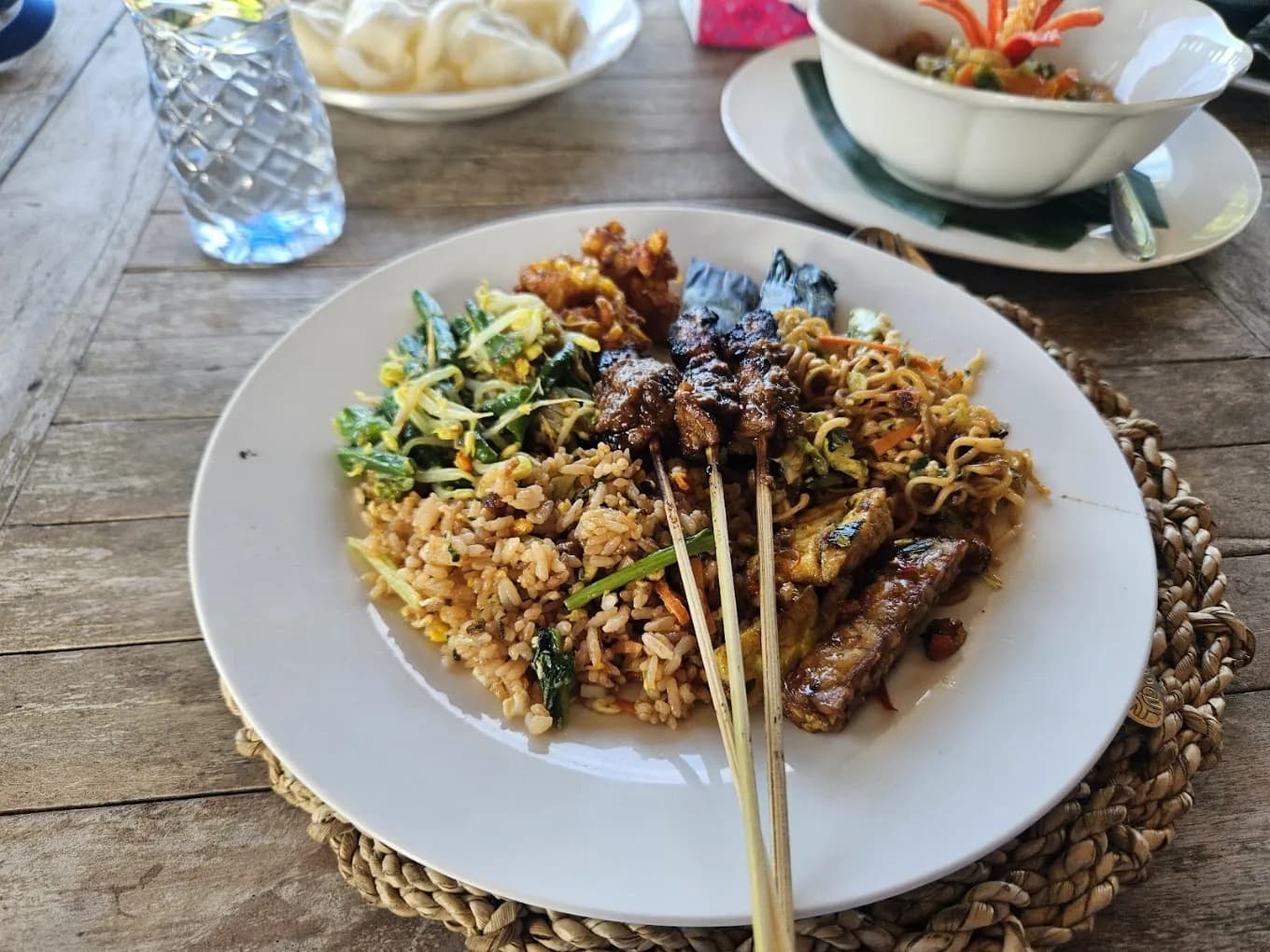
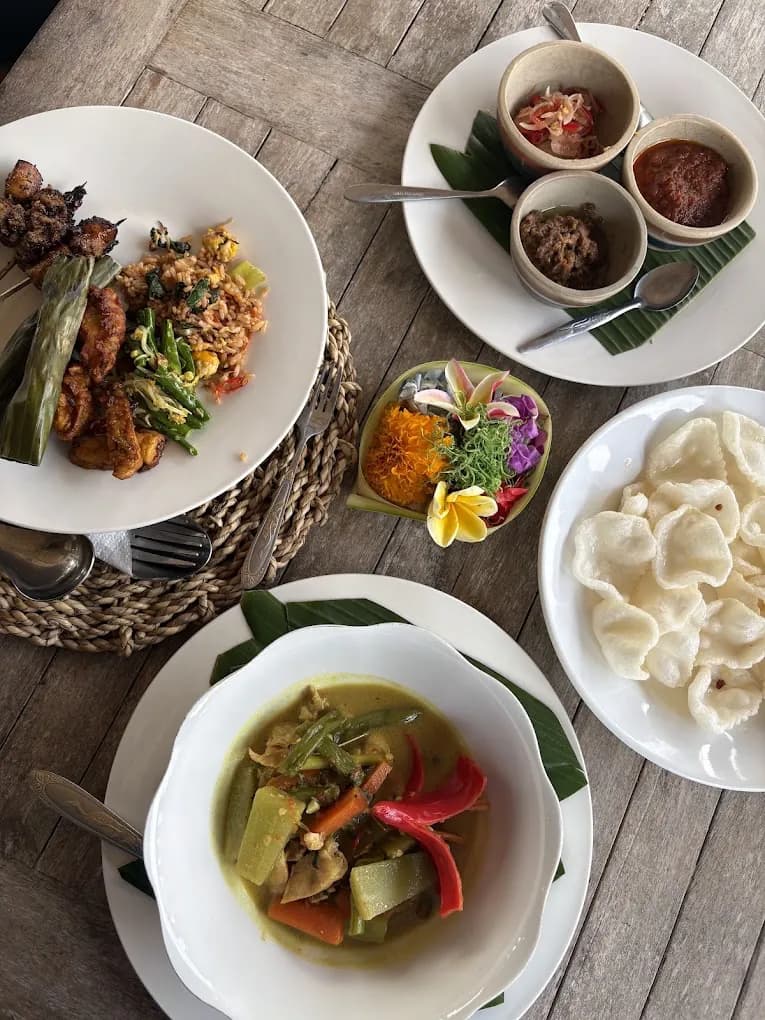
Tipat is compressed rice. The grain is packed into a small pouch woven from young coconut leaf and steamed until it sets into a sliceable cake. Ketupat is the Indonesian and Javanese name for the same kind of pouch rice, often a diamond weave. In Bali the pouch is usually flatter. The rice is not nasi kuning: no turmeric, no coconut milk, and it is never fluffed.
Weaving a tight pouch takes practice. Buy empty casings at a morning market, or buy tipat already steamed. A class morning in Petulu can pick them up with the chilies. This method is for filling and steaming pouches you already have.
Tipat ingredients
- 300g jasmine rice, rinsed until the water runs almost clear
- 6 to 8 woven coconut-leaf pouches, or muslin bags of the same size
- Water, for soaking and steaming
- A pinch of salt (optional)
How to make tipat
- Soak the rinsed rice for 20 minutes, then drain it well. Wet rice overfills the pouch as it swells.
- Fill each pouch a little over half full. The rice needs room to expand and press against the leaf. Do not pack it to the brim. Tie or fold the opening the way the weaver left it.
- Steam over a full pot of water for about 2 hours. Top up the water so the pot does not boil dry. The pouches should sit above the water, not in it.
- Cool until you can handle them. Peel the leaf and slice the cake. The grain should hold a cut and look pressed, not loose.
- Eat with lawar, sate, or sambal embe. Leftover tipat can be fried the next day, but it dries if it sits uncovered.
If you cannot find a coconut-leaf pouch, a small muslin bag will compress the rice, but you lose the leaf smell. Nasi kuning is the loose yellow rice under a class feast when tipat is not on the board.
Tipat questions
- What is the difference between tipat and ketupat?
- They are the same idea: rice compressed in a leaf pouch. Tipat is the Balinese name, usually a flatter pouch. Ketupat is the Indonesian and Javanese name, often a diamond weave.
- Is tipat the same as nasi kuning?
- No. Nasi kuning is loose turmeric coconut rice. Tipat is plain rice pressed in a pouch, with no turmeric and no coconut milk.
- Do I have to weave the pouch?
- No. Buy empty casings or ready-steamed tipat at a morning market. A muslin bag will compress the rice if you cannot find leaf.
- What do you eat tipat with?
- Lawar, sate, or sambal embe. Slice the cake after it cools enough to handle.
Cook next from the same kitchen
- Nasi kuningHow to make nasi kuning: turmeric coconut rice cooked with lemongrass and lime leaf until gold and separate. Four servings from a Petulu kitchen, 30 minutes.
- LawarHow to make cooked Balinese lawar: minced chicken or jackfruit tossed with fried base genep, grated coconut, and fried shallot. Four servings, about 40 minutes.
- Sambal embeHow to make sambal embe: shallot fried gold in coconut oil, then chili and salt. A cooked Balinese sambal that keeps a day, unlike raw sambal matah. 20 minutes.