Cook in Bali
Learn to make sambal matah in Bali, by hand
Slice sambal matah in Petulu
IDR 350.000per guest, shared class
What your hands learn when you make sambal matah in a Balinese kitchen: paper-thin shallot and chili, hot coconut oil, and a bowl that stays raw.
By Chef Wayan Suryana, Warung Tumang BaliLast updated
The short answer
Sambal matah is Bali’s raw shallot sambal. In the Petulu class with Chef Wayan you learn three things by hand: a paper-thin cut, hot coconut oil poured over the aromatics, and lime-and-salt finish. Only the oil is cooked. The bowl sits with the grilled dishes; morning sessions buy the chilies at the Ubud market first.
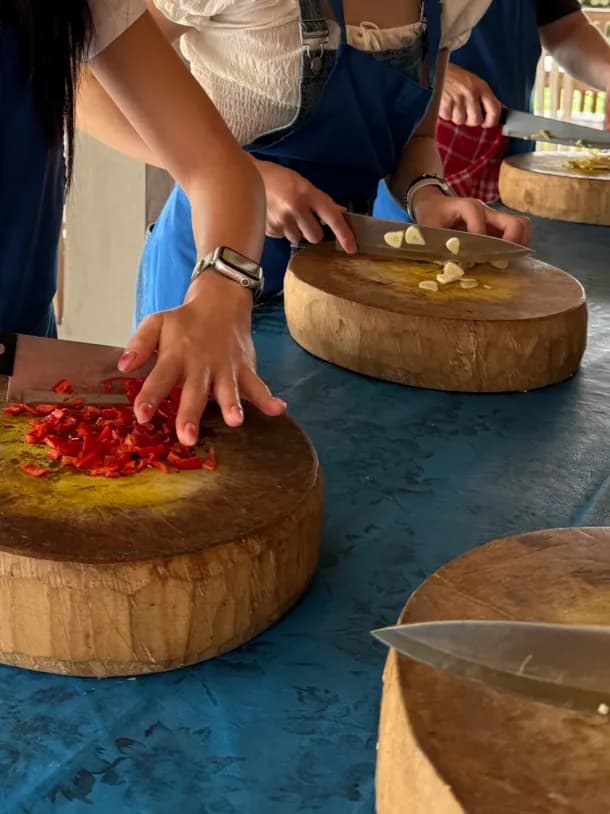
Three things your hands learn
The first skill is the cut. Shallot, bird’s-eye chili, lemongrass, and lime leaf go paper-thin. Thick slices stay sharp and raw in a bad way; thin ones soften when the oil hits. At the Petulu table you watch the knife angle once, then take a turn yourself.
The second is the oil. Coconut oil heats until it shimmers, then pours over the aromatics. Too cool and nothing opens; too hot and the shallot fries. Matah means raw: only the oil is cooked.
The third is the finish. Lime juice and salt go in after the oil settles. Taste, adjust, and stop. The bowl is for the same meal as the grilled fish and sate — not for the fridge overnight.
Why a page cannot show the cut
A recipe lists the ingredients. It cannot show how thin is thin enough, or what shimmering oil looks like before it browns the shallot. One session at the chopping block fixes that. The sambal matah recipe on this site has the quantities for home; the class is where the judgment forms.
Where sambal matah sits in the Petulu class
At Warung Tumang Bali, sambal matah is part of the full meal, not a stand-alone lesson. You grind base genep first, cook the savory dishes, and the raw sambal sits beside the grill. Morning sessions start at the Ubud morning market, where the chilies and shallots are still piled high. Afternoon sessions skip the market and end in dinner.
Shared days stop at eight guests. If the raw sambal is why you are booking, say so when you check dates. Vegetarian and vegan cooks use the same bowl; this kitchen’s matah has no shrimp paste.
Matah or embe
Sambal embe fries the shallot and chili until sweet and dark. Matah stays bright and sharp. Both appear on Balinese tables; the Petulu class usually puts matah next to the grilled dishes. The sambal embe recipe is written up if you want the fried version at home.
Questions before you book
- Can I learn to make sambal matah near Ubud?
- Yes. Guests at Warung Tumang Bali in Petulu slice and dress sambal matah at the spice table as part of the full meal class.
- Is sambal matah a whole class by itself?
- No. It is part of a full Balinese meal after base genep and the savory dishes. Say the sambal matters when you check dates.
- Does the class sambal matah use shrimp paste?
- Not in this kitchen. Shallot, chili, lemongrass, lime leaf, hot coconut oil, lime, and salt are enough.
More on cooking in Bali
- Learn to make sate lilit in BaliLearn to make sate lilit in Bali by hand: sticky mince on lemongrass, pressed tight, grilled over charcoal in a Petulu kitchen about 10 minutes from Ubud.
- Balinese dishes worth learning by handWhich Balinese dishes to learn in a Bali cooking class: base genep, sate lilit, sambal matah, pepes, and dadar gulung by hand; betutu and tipat at home.
- Learn to make dadar gulung in BaliLearn to make dadar gulung in Bali: swirl the pandan crepes thin, cook the coconut in palm sugar, and roll them yourself in a Petulu kitchen near Ubud.
The recipes, written down
- Sambal matahHow to make sambal matah: paper-thin shallot, chili, lemongrass, and lime leaf, dressed with hot coconut oil. Same-day raw sambal from Petulu, Ubud 80571.
- Sambal embeHow to make sambal embe: shallot fried gold in coconut oil, then chili and salt. A cooked Balinese sambal that keeps a day, unlike raw sambal matah. 20 minutes.
- Sate lilitHow to make sate lilit: mix fish or chicken with fried base genep and coconut, wrap it around lemongrass, and grill. Twelve skewers from a Petulu kitchen.
Plan the day around it
- The Ubud morning market, before the heatWhen to walk a working Ubud morning market: just after dawn, chili and coconut still piled, then leave. How the Petulu class uses those stalls, not souvenirs.
- Where the spice table sits on a food dayHow to read a Balinese spice table: chili, shallot, garlic, turmeric and roots, coconut, lime leaf, banana leaf, and what changes when the menu is plant-based.
- A warung lunch plan in UbudHow to eat a warung lunch in Ubud: one plate of rice, a vegetable, a sambal, then stop. Skip that extra plate when the Petulu kitchen is already lunch.
Where the kitchen is
Chef Wayan Suryana at Warung Tumang Bali, Banjar Laplapan, Petulu, Ubud, Gianyar, Bali 80571. The kitchen is about 10 minutes from central Ubud, depending on traffic. Pin -8.4945671, 115.2812928.