Cook in Bali
Cook it with your own hands in Bali
The recipes on this site are written down. These pages are about the parts you learn faster at a Balinese stove: the paste, the wrap, and the roll.
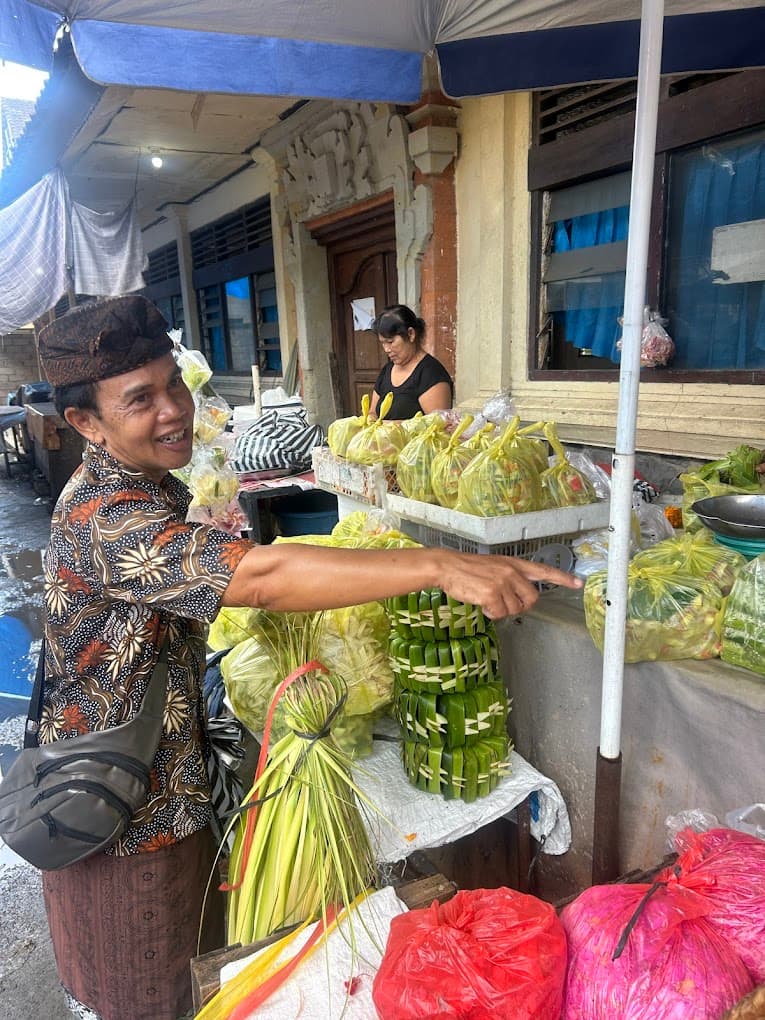
The morning market cooking class, step by step
What happens in the 8:30am Balinese cooking class in Petulu, Ubud: the morning market, a rice-field walk, two hours at the stove, and lunch by 12:30pm.
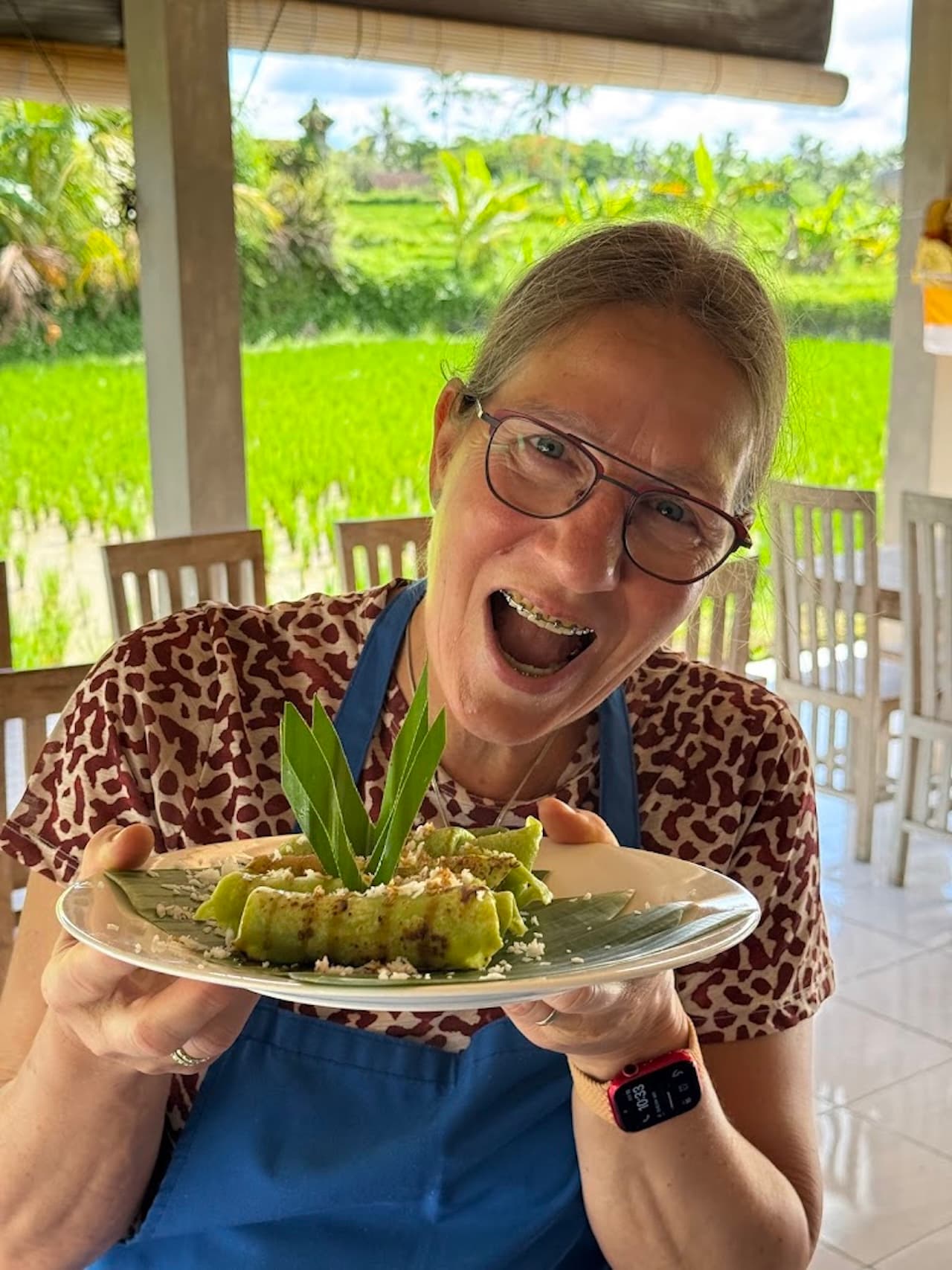
Learn to make dadar gulung in Bali
What your hands do when you make dadar gulung in a Balinese kitchen: swirl the pandan batter thin, cook coconut in palm sugar, then roll it tight.
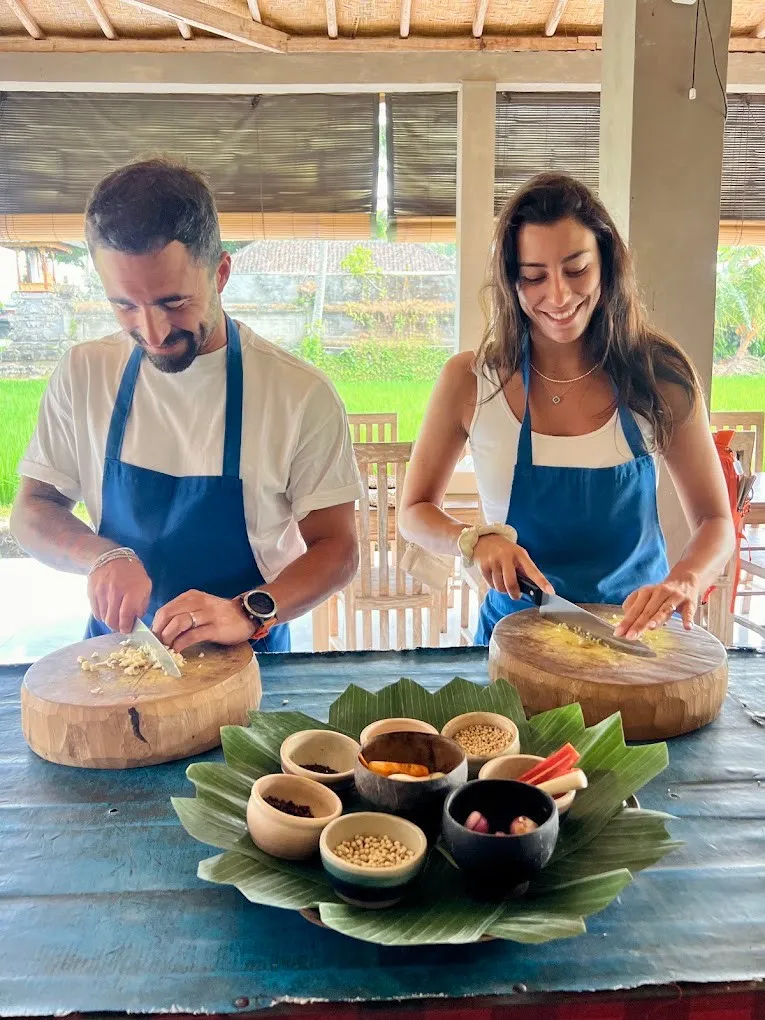
Balinese dishes worth learning by hand
Five Balinese dishes that are easier to learn at a stone mortar or a pan than from a page, and three that are better cooked slowly at home.
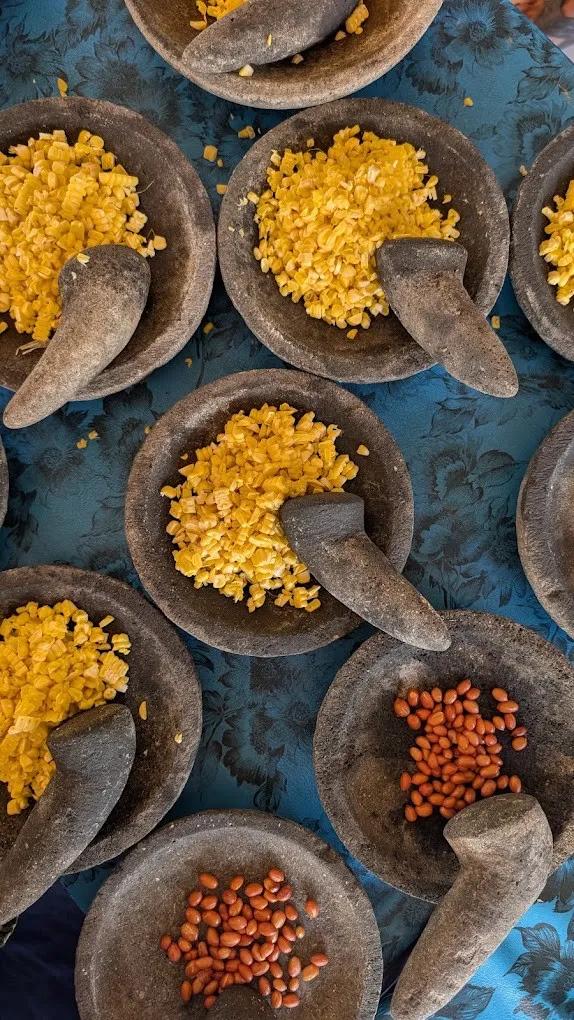
Cooking with a Balinese stone mortar
The flat stone mortar on every Balinese kitchen table: why cooks still grind by hand, how to use one without spraying chili, and what a blender misses.
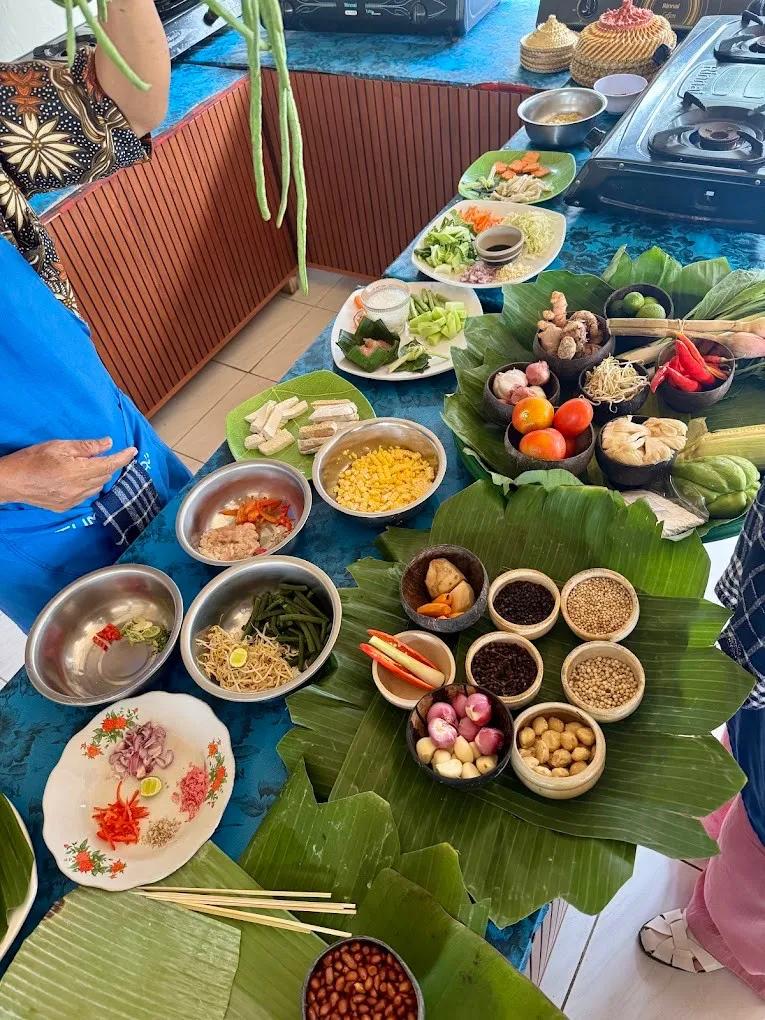
Balinese ingredients and what to use instead
Kencur, candlenut, salam leaf, palm sugar, and shrimp paste: what each one does in Balinese cooking, and the closest swap when your shop does not stock it.
What you collect at the Ubud morning market before you cook
The Balinese roots, leaves, and chilies you buy at the Ubud morning market with Chef Wayan, and how each one becomes a dish at the Petulu stove.
A cooking kitchen that looks onto Petulu rice fields
Warung Tumang Bali in Banjar Laplapan, Petulu: an open kitchen above working paddies, a short village walk from the market, calm enough that the stove is the loudest sound.
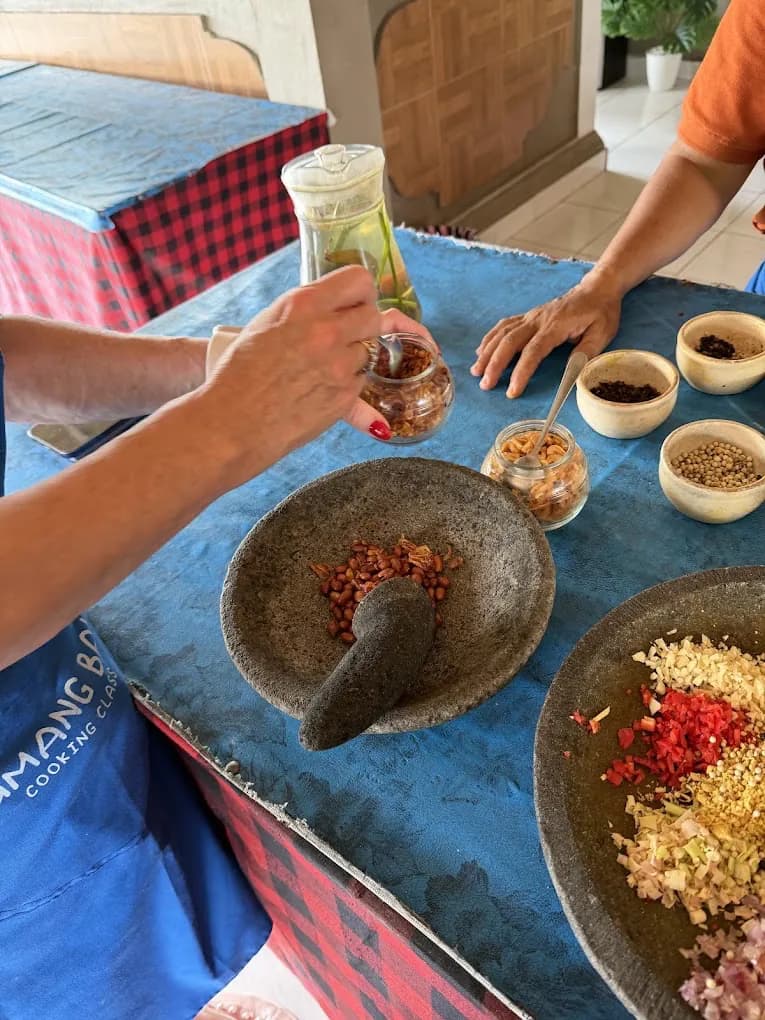
What authentic means in this Balinese home kitchen
Authentic here is a named chef, a stone mortar, a warung kitchen in Petulu that looks onto rice fields, and a meal you cook yourself — not a hotel demo.
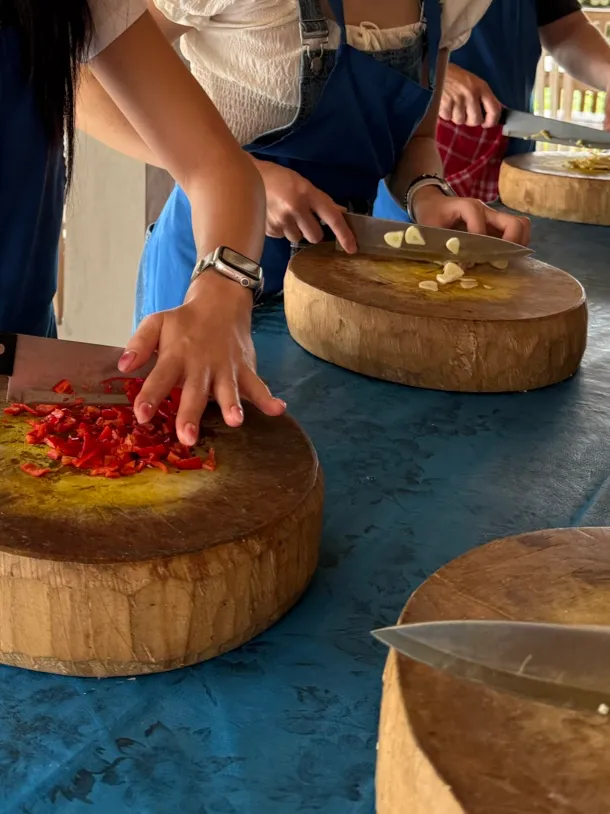
Learn to make sambal matah in Bali
What your hands learn when you make sambal matah in a Balinese kitchen: paper-thin shallot and chili, hot coconut oil, and a bowl that stays raw.
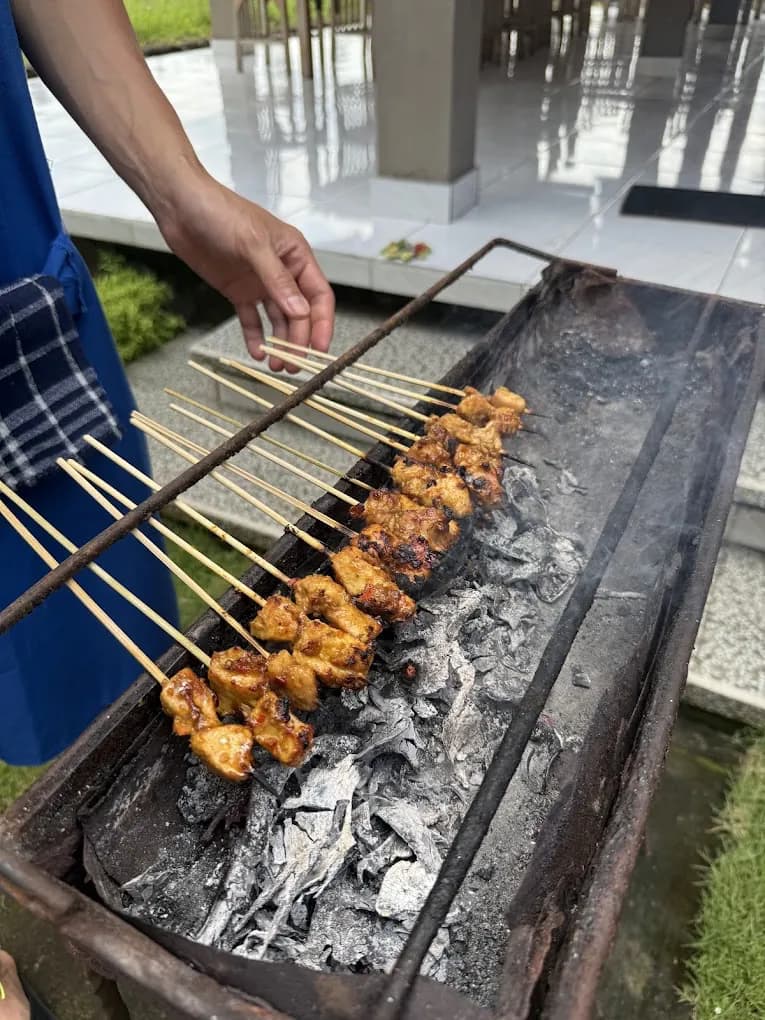
Learn to make sate lilit in Bali
What your hands learn when you press sate lilit onto lemongrass: sticky mince, a tight wrap, and charcoal that marks the outside without drying the middle.

A Balinese cooking class beside working rice terraces
Why book the Petulu class if you want rice terraces with the meal: walk the paddies, cook in an open kitchen with the fields in view, eat what you made — about 10 minutes from Ubud.
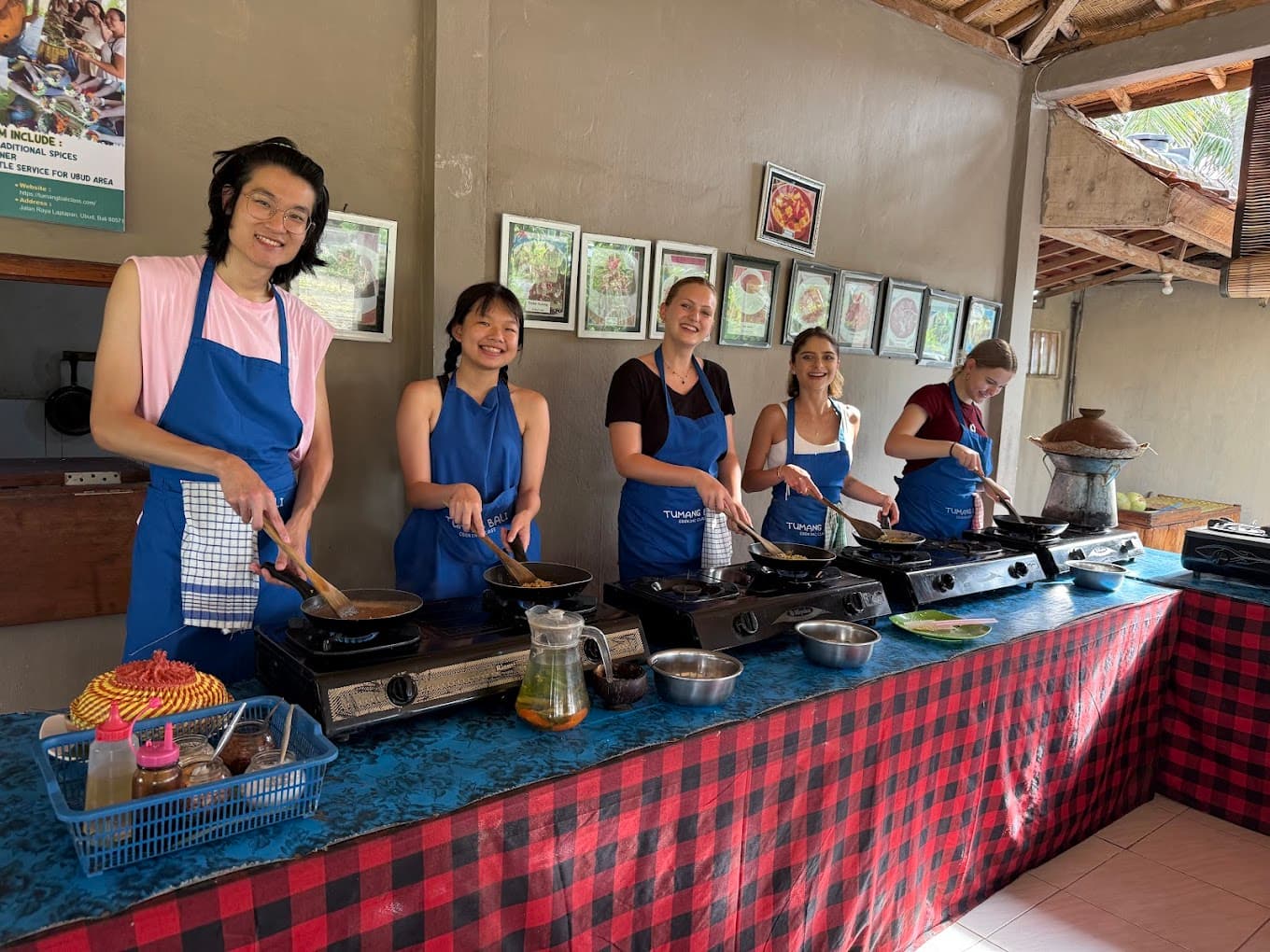
A family cooking class in Bali
A family cooking class in Bali at Warung Tumang Bali, Petulu, Ubud: children cook and eat with you. They pay IDR 450.000, the same as adults, and count toward eight seats.
Private vs shared cooking class in Bali
Private vs shared cooking class in Bali at Warung Tumang Bali, Petulu. Shared IDR 450.000 per guest, max eight. Private kitchen IDR 700.000 for your group — not a second per-person fee.
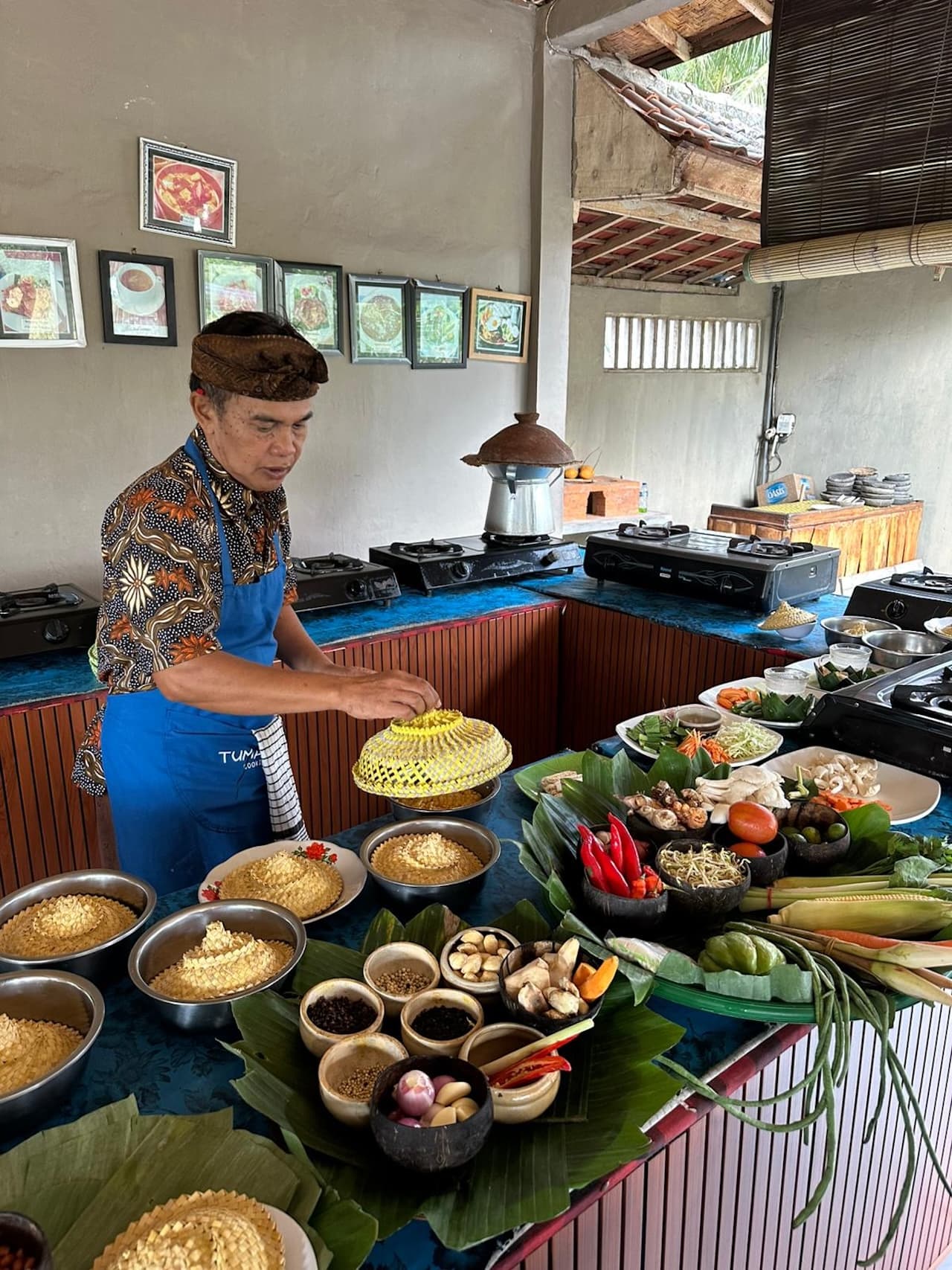
A vegetarian cooking class in Bali
A vegetarian cooking class in Bali at Warung Tumang Bali, Petulu: full plant board, shrimp paste out. Shared IDR 450.000. Vegan on request. Same stove as the meat day.
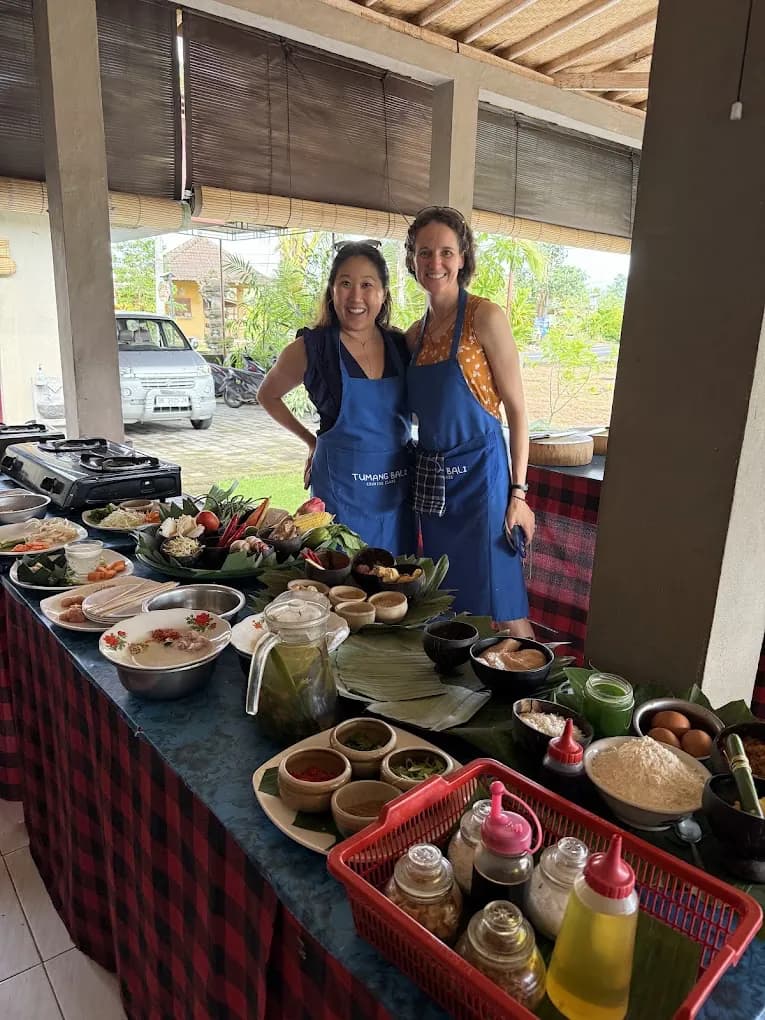
A small group cooking class in Bali
Small group cooking class in Bali at Warung Tumang Bali, Petulu: max eight guests, everyone cooks. Shared IDR 450.000. Private kitchen IDR 700.000 once per booking.
Paon Bali vs Warung Tumang cooking class
Paon Bali vs Warung Tumang in Laplapan, Petulu: same village cluster, different kitchens. Paon published IDR 350.000 (10 Oct 2026). Tumang shared IDR 450.000, max 8; private IDR 700.000 once.
Cooking classes in Laplapan near Ubud
Laplapan cooking classes near Ubud: Paon, Periuk, and Warung Tumang Bali in the same Petulu village pocket. Tumang shared IDR 450.000, max 8; private IDR 700.000 once.
Evening cooking class in Bali: Petulu afternoon dinner
Evening cooking class in Bali at Warung Tumang Bali means the 2:30–5:30pm Petulu session: rice walk, cook, dinner — not a 4pm farm sunset class. Shared IDR 450.000.
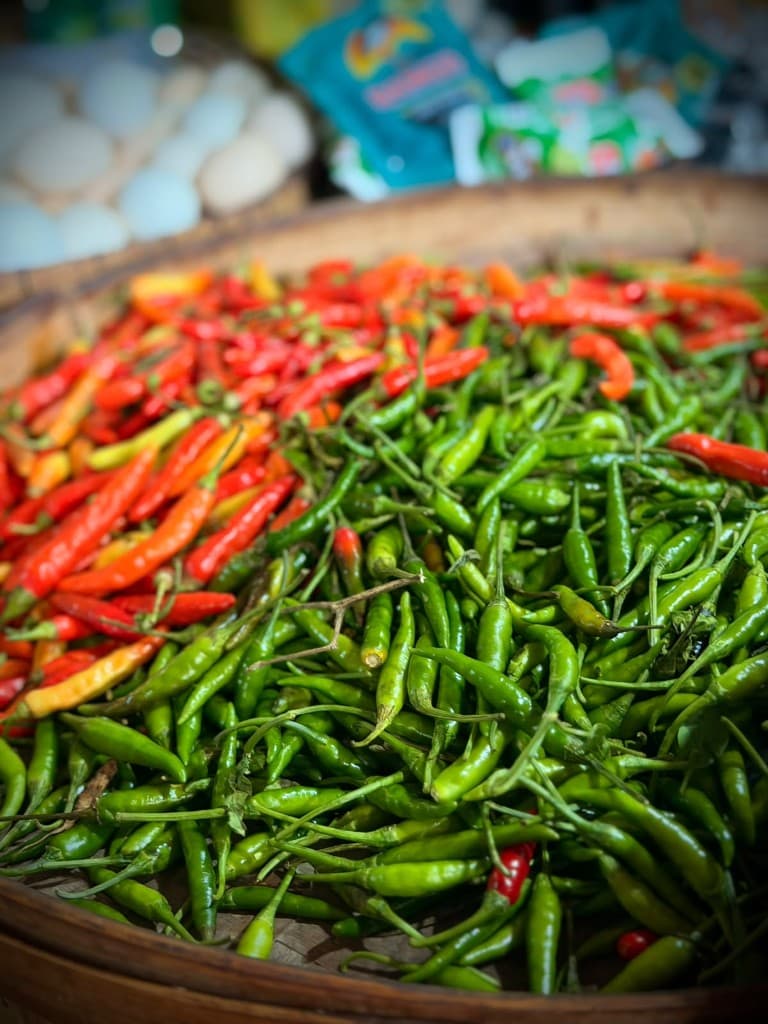
The chilies at the Ubud morning market, then sambal
Long red and green chilies in a market basket are what the 8:30am class buys, then slices into sambal matah in Petulu. IDR 450.000 per guest. The afternoon skips the market.