Cook in Bali
Balinese ingredients outside Bali, and what to use instead
Handle the real roots in Petulu
IDR 350.000per guest, shared class
Kencur, candlenut, salam leaf, palm sugar, and shrimp paste: what each one does in Balinese cooking, and the closest swap when your shop does not stock it.
By Chef Wayan Suryana, Warung Tumang BaliLast updated
The short answer
The closest swaps: extra galangal plus a little ginger for kencur, macadamia for candlenut, dark muscovado or coconut sugar for palm sugar, half as much ground turmeric as fresh, and lime zest for kaffir lime leaf. Leave out salam leaf rather than using European bay, and drop shrimp paste for a vegan paste.
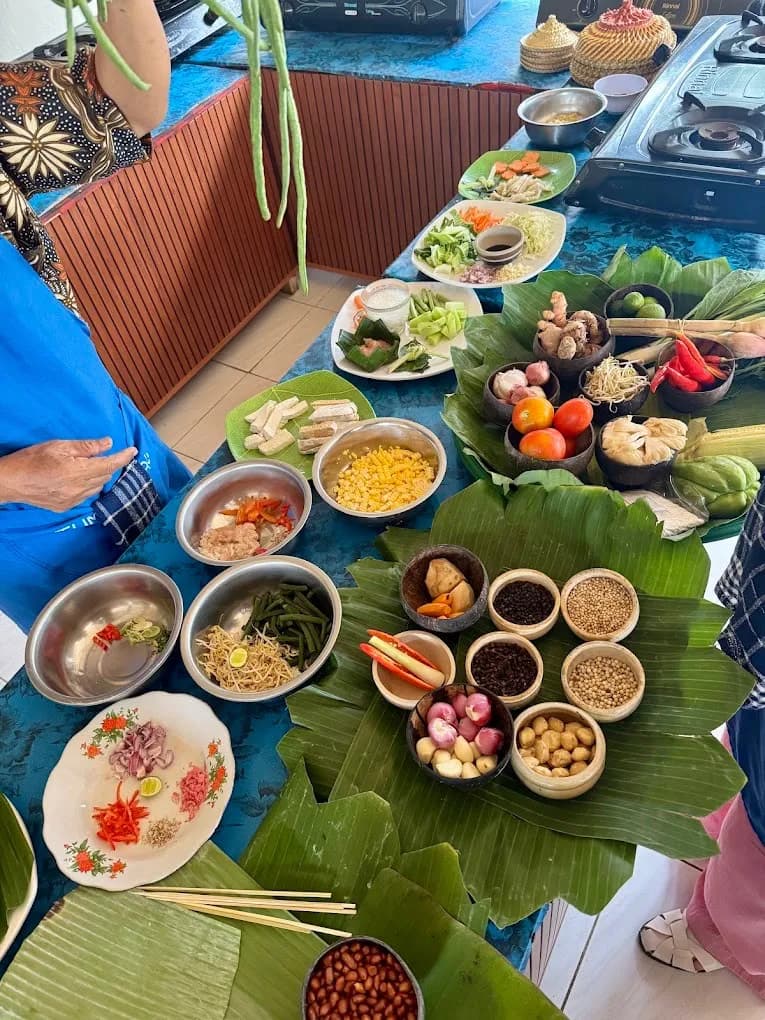
The roots
Kencur, also sold as aromatic ginger, gives base genep its sharp, camphor-like note. Look for it frozen or dried in Asian shops. Without it, use a little extra galangal and a small piece of ginger; the paste tastes softer but still Balinese.
Galangal is firmer and more piney than ginger, and ginger alone is a weak swap. Frozen or jarred galangal is better than none.
Fresh turmeric colors and perfumes yellow rice and the spice paste. Ground turmeric works: use about half as much powder as grated fresh root.
Nuts, sugar, and paste
Candlenut, kemiri in Indonesian, thickens and enriches the paste. It is never eaten raw; it is fried or toasted, then ground. Macadamia nuts are the usual substitute, used the same way.
Palm sugar, gula Bali, is darker and less sweet than a pale supermarket block. Dark muscovado or coconut sugar is the nearest swap; start with a little less.
Shrimp paste, terasi, adds depth to the classic paste. For a vegetarian or vegan table, leave it out and add a pinch more salt. That is how the Petulu kitchen cooks on plant-based requests.
Kecap manis, sweet soy, can be made at a pinch by simmering equal parts soy sauce and dark sugar until it turns syrupy.
Leaves
Salam leaf, sometimes called Indonesian bay, has no close match. Leave it out rather than using European bay, which tastes of something else.
Kaffir lime leaf: frozen leaves keep for months; a strip of lime zest is the fallback. Lemongrass freezes well too, and sate lilit needs whole stalks if you want them as skewers.
Pandan paste or extract stands in for fresh leaves in dadar gulung and klepon; frozen leaves from an Asian shop taste closer.
Handle the real ones first
Substitutes are easier to judge once you know the original. On the morning class you see kencur, galangal, turmeric, and candlenut at the market stalls, then grind them at the Petulu table and taste what a fresh root does. The printed recipe booklet you take home lists the same ingredients.
Questions before you book
- What can I use instead of kencur?
- A little extra galangal with a small piece of ginger. It is softer than kencur but keeps the paste Balinese. Frozen kencur from an Asian shop is closer.
- What is a substitute for candlenut?
- Macadamia nuts. Fry or toast them first, as you would candlenut, then grind them into the paste.
- Can I make base genep without shrimp paste?
- Yes. Leave it out and add a pinch more salt. The Petulu kitchen does exactly that for vegetarian and vegan guests.
More on cooking in Bali
- Cooking with a Balinese stone mortarHow to use a cobek and ulekan, the Indonesian stone mortar: grind hard to soft, roll instead of pound, add salt for grip. Why Balinese cooks grind by hand.
- Balinese dishes worth learning by handWhich Balinese dishes to learn in a Bali cooking class: base genep, sate lilit, sambal matah, pepes, and dadar gulung by hand; betutu and tipat at home.
The recipes, written down
- Base genepHow to make base genep (bumbu Bali): pound shallot, garlic, roots, and candlenut, then fry 8–10 minutes until the raw smell is gone. From a Petulu kitchen.
- Nasi kuningHow to make nasi kuning: turmeric coconut rice cooked with lemongrass and lime leaf until gold and separate. Four servings from a Petulu kitchen, 30 minutes.
- Sate lilitHow to make sate lilit: mix fish or chicken with fried base genep and coconut, wrap it around lemongrass, and grill. Twelve skewers from a Petulu kitchen.
Plan the day around it
- The Ubud morning market, before the heatWhen to walk a working Ubud morning market: just after dawn, chili and coconut still piled, then leave. How the Petulu class uses those stalls, not souvenirs.
- Where the spice table sits on a food dayHow to read a Balinese spice table: chili, shallot, garlic, turmeric and roots, coconut, lime leaf, banana leaf, and what changes when the menu is plant-based.
Where the kitchen is
Chef Wayan Suryana at Warung Tumang Bali, Banjar Laplapan, Petulu, Ubud, Gianyar, Bali 80571. The kitchen is about 10 minutes from central Ubud, depending on traffic. Pin -8.4945671, 115.2812928.