Cook in Bali
Ubud morning market ingredients: what you collect before you cook
Shop the market, then cook
IDR 350.000per guest, shared class
The Balinese roots, leaves, and chilies you buy at the Ubud morning market with Chef Wayan, and how each one becomes a dish at the Petulu stove.
By Chef Wayan Suryana, Warung Tumang BaliLast updated
The short answer
On the 8:30am class at Warung Tumang Bali, Chef Wayan walks the Ubud morning market for about 45 minutes and collects shallot, garlic, chili, galangal, turmeric, kencur, lemongrass, lime leaf, candlenut, grated coconut, banana leaves, and palm sugar. Those ingredients become base genep and 10+ dishes at the Petulu kitchen after a short rice-field walk.
Why the class starts with a basket, not a recipe
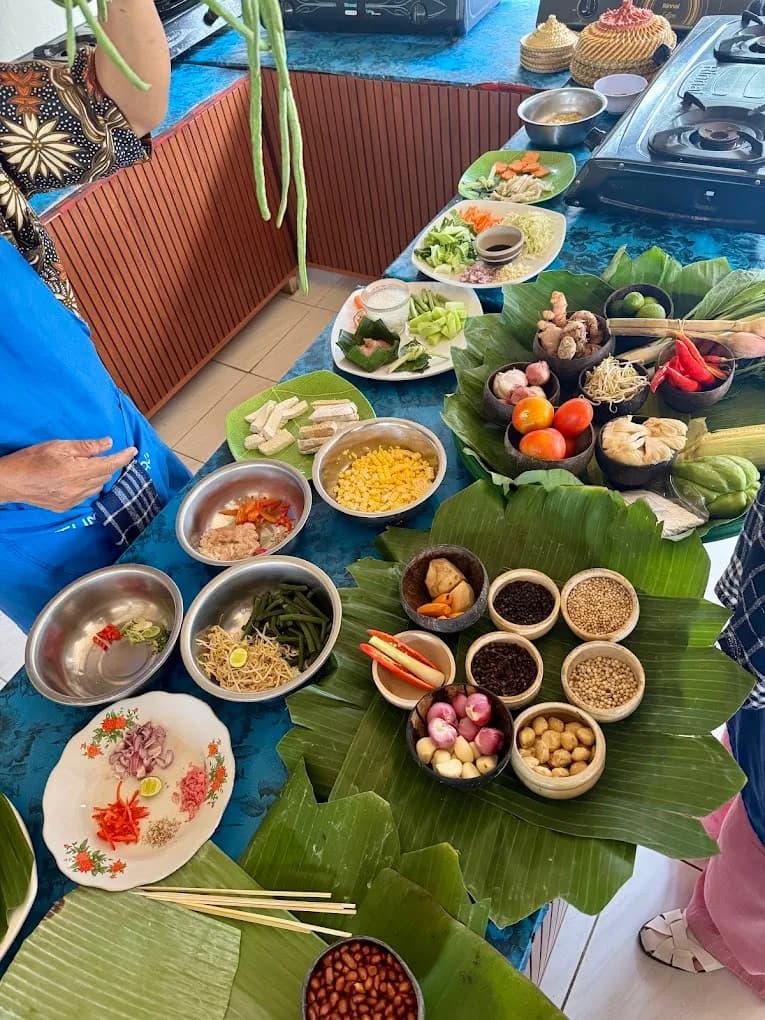
Balinese cooking begins at the stall, not the chopping board. On the 8:30am session at Warung Tumang Bali, Chef Wayan Suryana walks the Ubud morning market first so you see galangal, turmeric, kencur, lemongrass, bird’s-eye chili, and palm sugar before they go into the paste. You learn to tell the roots apart by smell and cut, then carry what you need back to Petulu.
The visit lasts about 45 minutes. It is a working household market, not a souvenir lane. The afternoon class skips it and starts at the rice fields instead.
What goes in the basket
Shallot, garlic, and chili for sambal matah and the grind. Galangal, turmeric, ginger, and kencur for base genep, the spice paste behind most of the meal. Candlenut for body, lemongrass and lime leaf for fragrance, grated coconut for urap-style vegetables, and banana leaves for wraps such as pepes.
Palm sugar and pandan appear when the board ends with dadar gulung. Shrimp paste stays out of the grind for vegetarian and vegan guests; say so when you book.
From stall to stone mortar
After the market the group rides to Petulu and walks the rice-field bunds for about half an hour. At the kitchen you get a welcome drink, then grind the roots on a stone mortar into base genep and cook 10+ dishes by hand. Shared days stop at eight guests, so everyone takes a turn. The full morning is written out step by step if you want the clock.
The printed recipe booklet you take home lists the same ingredients you held at the stall. That is why the market stop matters more than a photo of chili piles: the list in your hand matches what you cooked.
If you only want the market
You can walk the stalls alone just after dawn and leave before the heat. Breakfast can be a simple plate at the edge. The class is the version that turns those piles into lunch by about 12:30pm, with free pickup from hotels and villas in the main Ubud area.
Questions before you book
- What ingredients do you buy at the Ubud morning market for a cooking class?
- Roots and aromatics for base genep (galangal, turmeric, ginger, kencur, shallot, garlic, chili, candlenut, lemongrass, lime leaf), plus grated coconut, banana leaves, and palm sugar when dadar gulung is on the board.
- How long is the market stop before cooking?
- About 45 minutes. The market visit is in the morning session only; the afternoon class skips it.
- Do vegetarians buy different ingredients?
- The stall list is the same. Shrimp paste is left out of the grind at the kitchen when you book vegetarian or vegan.
More on cooking in Bali
- The morning market cooking class, step by stepWhat to expect at the 8:30am Balinese cooking class in Petulu, Ubud: 45 minutes at the market, a rice-field walk, two hours of cooking, and lunch by 12:30pm.
- Balinese ingredients and what to use insteadBalinese ingredient substitutes: kencur, candlenut, salam leaf, palm sugar, shrimp paste, and fresh turmeric. What each one does and the closest swap at home.
- A cooking kitchen that looks onto Petulu rice fieldsA Balinese cooking kitchen in Petulu, Ubud, with a view over working rice terraces: small groups, a village walk, and calm stove hours away from central Ubud.
The recipes, written down
- Base genepHow to make base genep (bumbu Bali): pound shallot, garlic, roots, and candlenut, then fry 8–10 minutes until the raw smell is gone. From a Petulu kitchen.
- Sambal matahHow to make sambal matah: paper-thin shallot, chili, lemongrass, and lime leaf, dressed with hot coconut oil. Same-day raw sambal from Petulu, Ubud 80571.
- Pepes ikanHow to make Balinese pepes ikan: fish rubbed with base genep, tomato, chili, and basil, wrapped in banana leaf, then steamed or grilled. Four parcels, 45 min.
Plan the day around it
- The Ubud morning market, before the heatWhen to walk a working Ubud morning market: just after dawn, chili and coconut still piled, then leave. How the Petulu class uses those stalls, not souvenirs.
- Where the spice table sits on a food dayHow to read a Balinese spice table: chili, shallot, garlic, turmeric and roots, coconut, lime leaf, banana leaf, and what changes when the menu is plant-based.
- Market to kitchen: a half-day food arc in UbudMarket to kitchen in Ubud: collect ingredients at the morning market, walk Petulu rice fields, cook 10+ dishes, and eat lunch by 12:30pm at a village warung.
Where the kitchen is
Chef Wayan Suryana at Warung Tumang Bali, Banjar Laplapan, Petulu, Ubud, Gianyar, Bali 80571. The kitchen is about 10 minutes from central Ubud, depending on traffic. Pin -8.4945671, 115.2812928.